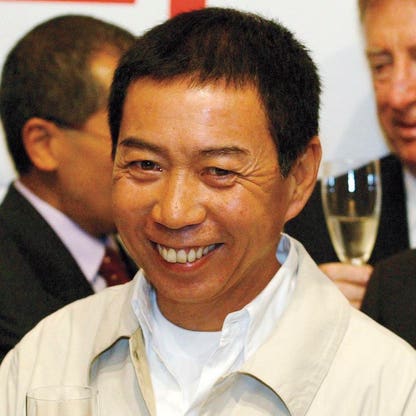
Michael Ying Net Worth vs. Wei Ying-Chiao: Clearing the Confusion
In the vast landscape of global business and finance, certain names resonate with immense wealth and influence. However, navigating the digital age often presents an interesting challenge: distinguishing between prominent figures whose names might sound similar, leading to widespread confusion, especially when searching for financial information like Searching Michael Ying Net Worth? What Our Sources Show. One such common mix-up involves two highly successful Asian tycoons: Michael Ying and Wei Ying-Chiao.
For many, a search for "Michael Ying net worth" might inadvertently lead to details about Wei Ying-Chiao, creating a blurred picture of their distinct achievements and financial standings. This article aims to untangle this common misconception, providing a clear distinction between these two powerful individuals, delving into their backgrounds, and addressing the specific challenges in accurately estimating their respective net worths, particularly for Michael Ying.
Understanding the Core Confusion: Michael Ying vs. Wei Ying-Chiao
The primary reason for the frequent mix-up between Michael Ying and Wei Ying-Chiao stems from the phonetic similarities of their names, particularly in English-speaking contexts or within search engine algorithms. Both are highly influential figures in Asian business, associated with substantial wealth and significant entrepreneurial success. This superficial resemblance, combined with the often complex and international nature of their business empires, makes it easy for their identities and financial details to become conflated in public discourse.
It's crucial to establish upfront: Michael Ying and Wei Ying-Chiao are two entirely distinct individuals with different nationalities, business ventures, and paths to success. While both command considerable respect and wealth, their stories are unique and deserve to be understood separately.
Who is Michael Ying? A Legacy Beyond the Numbers
Michael Ying Lee Yuen, a name synonymous with savvy business acumen and strategic investment, is a prominent Hong Kong-based billionaire. His career is a testament to foresight and bold decision-making, most notably his transformative role at Esprit Holdings, a global fashion retailer. Ying joined Esprit in 1993, eventually becoming its chairman. Under his leadership, the brand experienced significant growth, expanding its presence worldwide.
Ying's most celebrated business move was the strategic divestment of his stake in Esprit. Over several years, he gradually sold off his shares, famously cashing out a significant portion of his holdings at opportune moments. This move solidified his reputation as a shrewd investor capable of timing the market effectively. Following his departure from Esprit, Michael Ying transitioned into a more diversified portfolio of private investments, including luxury brands, real estate, and private equity.
Beyond his corporate successes, Ying is also known for his philanthropic efforts, particularly in education and healthcare, contributing generously to various causes. His lifestyle reflects his immense wealth, with reports of luxury properties, private jets, and a significant art collection underscoring his billionaire status.
The Elusive Michael Ying Net Worth
While Michael Ying's wealth is undeniable and widely acknowledged, arriving at a precise, publicly verified figure for his Michael Ying Net Worth: Why Specific Data Is Hard to Find proves challenging. Unlike individuals who derive the bulk of their wealth from publicly traded companies where their holdings are transparent, much of Ying's current fortune is believed to be tied up in private investments. These can include:
- Private Equity Funds: Investments in various companies not listed on stock exchanges.
- Real Estate Holdings: A portfolio of luxury properties globally.
- Art Collections: Significant and valuable art pieces.
- Venture Capital: Stakes in startups and emerging businesses.
The valuation of such assets is often complex and not publicly disclosed, making it difficult for financial publications to provide an exact, up-to-the-minute estimate. However, based on his past major transactions (like the Esprit sale) and ongoing high-profile investments, it is widely accepted that his net worth comfortably places him among the ranks of billionaires, likely in the multi-billion dollar range.
Wei Ying-Chiao: The Architect of a Food and Beverage Empire
In stark contrast to Michael Ying's fashion and diversified investment background, Wei Ying-Chiao is a Taiwanese business magnate primarily known for his co-founding role in the Ting Hsin International Group. This conglomerate is one of Asia's largest food and beverage companies, with its flagship brand, Master Kong (康师傅), being a household name across mainland China for its instant noodles, beverages, and snack foods.
Wei Ying-Chiao, along with his three brothers, established Ting Hsin in the 1950s, initially focusing on oil and fat production. Their strategic move into instant noodles in the early 1990s, capitalizing on China's booming consumer market, propelled the group to unparalleled success. Today, Ting Hsin's influence spans across various sectors, including fast food chains, retail, and real estate, in addition to its dominant position in the food and beverage industry.
Wei Ying-Chiao's More Transparent Net Worth
Unlike the more private nature of Michael Ying's current holdings, Wei Ying-Chiao's wealth is primarily derived from his significant stake in the publicly traded entities of Ting Hsin International Group, particularly Tingyi (Cayman Islands) Holding Corp., which operates the Master Kong brand. As such, financial publications like Forbes and Bloomberg routinely feature Wei Ying-Chiao (and often his brothers) on their lists of Taiwan's wealthiest individuals.
Estimates for Wei Ying-Chiao's net worth routinely place his fortune in the multi-billion dollar range, with figures fluctuating based on the stock performance of Tingyi and the overall market valuation of the Ting Hsin conglomerate. These figures are generally more accessible and frequently updated due to the public nature of the underlying assets.
Why Differentiating Matters: Beyond Just Names
Understanding the clear distinction between Michael Ying and Wei Ying-Chiao is more than just a matter of accuracy; it has practical implications, especially for those seeking business insights or investment knowledge. Misattributing financial data or career achievements can lead to:
- Inaccurate Market Analysis: Confusing their industries means misinterpreting trends in fashion, luxury goods, or the food and beverage sector.
- Misinformed Investment Decisions: Researching one and finding information about the other could lead to misguided investment strategies.
- Distorted Public Perception: It can obscure the true legacy and contributions of each individual to their respective fields.
When conducting research on high-net-worth individuals, it's always advisable to cross-reference information and pay close attention to company affiliations, nationality, and the specific industries in which they operate. For instance, if your query is specifically about Michael Ying Net Worth, ensure the information you find pertains to the Hong Kong businessman with ties to Esprit and private equity, not the Taiwanese food magnate.
The Challenge of Quantifying Ultra-High Net Worth
The difficulties in pinpointing an exact net worth figure for individuals like Michael Ying highlight a broader challenge in wealth estimation for the ultra-rich. Many billionaires, especially those who have diversified their portfolios beyond single public companies, hold a significant portion of their assets in private entities, complex trusts, or opaque investment vehicles. These can include:
- Private Company Valuations: Estimating the worth of privately held businesses requires deep insight into their financials, which are not publicly disclosed.
- Diverse Investment Portfolios: Wealth is often spread across various asset classes—equities, bonds, hedge funds, venture capital, real estate, art, and collectibles—making a consolidated valuation complex.
- Dynamic Market Conditions: The value of assets, especially stocks and real estate, constantly fluctuates, making any net worth figure a snapshot in time.
- Philanthropic Engagements: Large donations and charitable trusts can also influence reported net worth figures.
This inherent opacity is precisely Michael Ying Net Worth: Why Specific Data Is Hard to Find. While his wealth is indisputable, its exact numerical representation remains a subject of informed estimation rather than precise public accounting.
Conclusion
The confusion between Michael Ying and Wei Ying-Chiao serves as a compelling reminder of the importance of accuracy in a data-rich world. While both are titans in their respective fields, they represent distinct narratives of entrepreneurial success in Asia. Michael Ying, the strategic investor and former fashion retail magnate from Hong Kong, maintains a more private financial profile after his major corporate exits, making his precise net worth challenging to ascertain publicly. Wei Ying-Chiao, the Taiwanese co-founder of the food and beverage giant Ting Hsin International Group, has a net worth that is more frequently reported due to his holdings in publicly traded entities.
By understanding their individual journeys and the nature of their wealth, we can appreciate their unique contributions to the global economy without falling prey to common misunderstandings. While the exact "Michael Ying net worth" may continue to be an estimation rather than a definitive figure, his legacy as a brilliant businessman and investor remains firmly established.